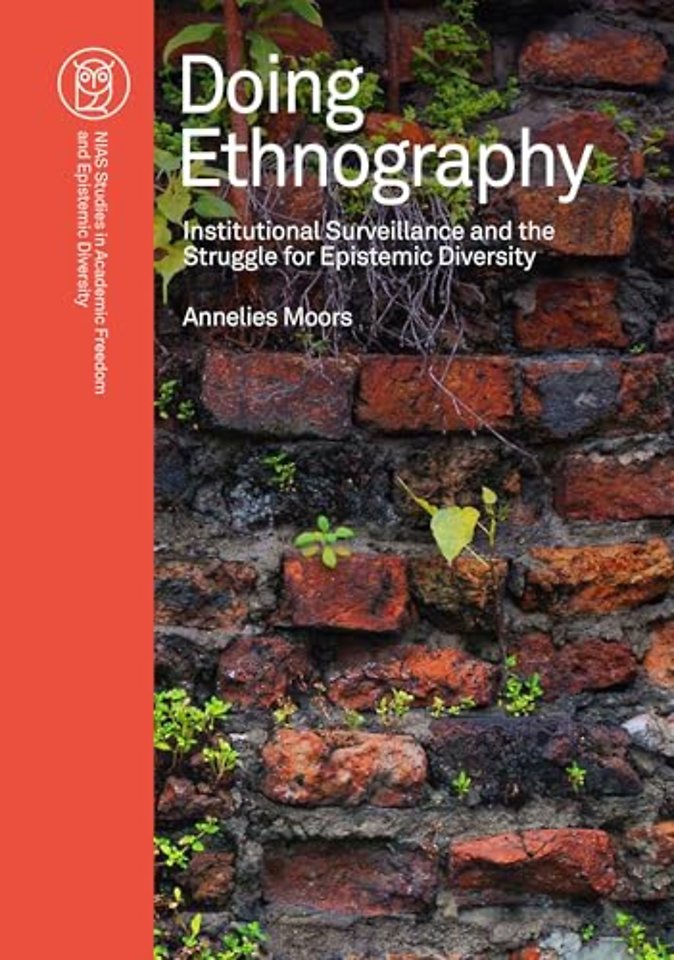
Doing Ethnography
Institutional Surveillance and the Struggle for Epistemic Diversity
Samenvatting
In recent decades, academic research has come under increasing institutional surveillance and control. Doing Ethnography traces the rise of ethical review procedures, open science mandates, and integrity protocols, examining how these developments shape ethnographic practice. It critically explores key themes such as doing no harm, informed consent, transparency, anonymity, researcher positionality, and the sharing of field notes.
The book argues that contemporary academia often enforces universal, bureaucratic forms of regulatory ethics. Rooted in quantitative and (post-)positivist paradigms, these frameworks frequently clash with ethnography’s interpretive, intersubjective, and immersive fieldwork approach. In response, it calls for a situated, context-sensitive ethics of care attuned to the specificities of ethnographic engagement. Ultimately, Doing Ethnography offers both a critical reflection on institutional power and a plea to recognise and sustain the epistemic diversity on which academic freedom depends.
Specificaties
Inhoudsopgave
Chapter 1. Beyond an affaire: managing ethnography
1.1. An article and its afterlife: reputation management in action
1.2. Engaging with the trouble: ethnography, academia, and society
1.3. Writing this book: set-up and chapters
Chapter 2. Doing ethnography: an approach, not a method
2.1. Ethnography as relational and processual
2.2. Ethnography beyond anthropology
2.3. Ethnography in a changing world
2.4. Conclusion: epistemological plurality
Chapter 3. Research ethics: problems with regulation
3.1. Ethical self-regulation in anthropology
3.2. Enforceable ethics: state governance and beyond
3.3. Conclusion: doing ethics differently
Chapter 4. The complexities of doing no harm and informed consent
4.1. Doing no harm: power and ethos
4.2. Informed consent: the forms
4.3. Informed consent: the principle
4.4. Ethnography, concealment, and publication
4.5. Conclusion: ethical dilemmas
Chapter 5. Open Science and replication: trust, distrust, and transparency
5.1. The Open Science movement: from utopia to dystopia?
5.2. The trouble with transparency
5.3. The replication crisis: what does it mean?
5.4. Ethnography, replication, and openness
5.5. Conclusion: another kind of openness
Chapter 6. Constructing integrity: codification in context
6.1. Public scandals and the emergence of integrity codes
6.2. Constructing integrity: comparing the codes
6.3. Policy-making: projectification and integrity
6.4. Conclusion: from ethics to commerce
Chapter 7. Anonymity, positionality, and field notes: integrity in practice
7.1. Contesting anonymity: a turn to disclosure?
7.2. Positionality and substance: relations in process
7.3. The problem with sharing field notes
7.4. Conclusion: a case-by-case approach
Chapter 8. Academic freedom: scholarship and politics
8.1. A diversity of perspectives: politicising the academy
8.2. Funding and employment
8.3. External threats and internal harassment
8.4. Israel/Palestine: academic freedom in action
8.5. Conclusion: acting with responsibility
Chapter 9. Conclusion: dilemmas and responsibilities
9.1. Ethics, integrity, and power
9.2. Doing ethics and integrity differently
9.3. Academic freedom: ethnography and beyond
Notes
References
Anderen die dit kochten, kochten ook
-
 Genieke Hertoghs€ 34,50
 -
Marianne Heemskerk€ 29,95
-
Harm Oosterhuis€ 20,00
-
Philip J. Idenburg€ 29,95
-
Boaz Bijleveld€ 27,95
-
Rik Peels€ 15,00




Net verschenen
Rubrieken
- aanbestedingsrecht
- aansprakelijkheids- en verzekeringsrecht
- accountancy
- algemeen juridisch
- arbeidsrecht
- bank- en effectenrecht
- bestuursrecht
- bouwrecht
- burgerlijk recht en procesrecht
- europees-internationaal recht
- fiscaal recht
- gezondheidsrecht
- insolventierecht
- intellectuele eigendom en ict-recht
- management
- mens en maatschappij
- milieu- en omgevingsrecht
- notarieel recht
- ondernemingsrecht
- pensioenrecht
- personen- en familierecht
- sociale zekerheidsrecht
- staatsrecht
- strafrecht en criminologie
- vastgoed- en huurrecht
- vreemdelingenrecht