Asymmetric Conflicts
War Initiation by Weaker Powers
Samenvatting
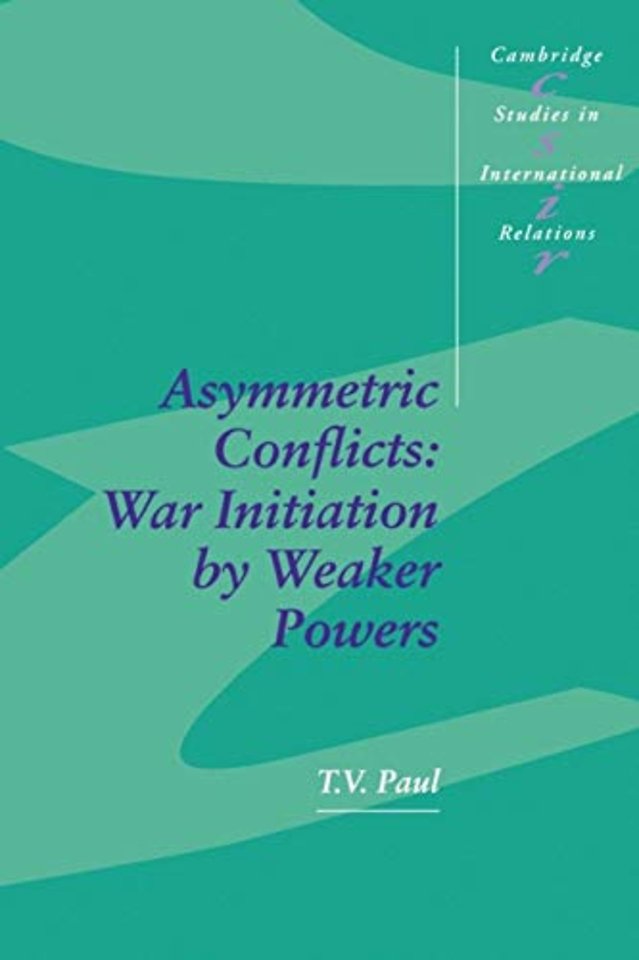
This book examines a question generally neglected in the study of international relations: why does a militarily and economically less powerful state initiate conflict against a relatively strong state? T. V. Paul analyses this phenomenon by focusing on the strategic and political considerations, domestic and international, which influence a weaker state to initiate war against a more powerful adversary. The key argument of deterrence theory is that the military superiority of the status quo power, coupled with a credible retaliatory threat, will prevent attack by challengers. The author challenges this assumption by examining six twentieth-century asymmetric wars, from the Japanese offensive against Russia in 1904 to the Argentine invasion of the Falkland Islands in 1982. The book's findings have wide implications for the study of war, power, deterrence, coercive diplomacy, strategy, arms races, and alliances.
Specificaties
Inhoudsopgave
Vaak samen gekocht


Anderen die dit boek kochten, kochten ook
-
 Pieter Serrien€ 29,99
 -
Arnout Jaspers€ 23,50
-
Jacobus de Voragine€ 39,90
-
Klaas A.D. Smelik€ 15,50
-
Peter Rodenburg€ 29,99
-
Victor D. Cha€ 26,99





Net verschenen
Rubrieken
- aanbestedingsrecht
- aansprakelijkheids- en verzekeringsrecht
- accountancy
- algemeen juridisch
- arbeidsrecht
- bank- en effectenrecht
- bestuursrecht
- bouwrecht
- burgerlijk recht en procesrecht
- europees-internationaal recht
- fiscaal recht
- gezondheidsrecht
- insolventierecht
- intellectuele eigendom en ict-recht
- management
- mens en maatschappij
- milieu- en omgevingsrecht
- notarieel recht
- ondernemingsrecht
- pensioenrecht
- personen- en familierecht
- sociale zekerheidsrecht
- staatsrecht
- strafrecht en criminologie
- vastgoed- en huurrecht
- vreemdelingenrecht